
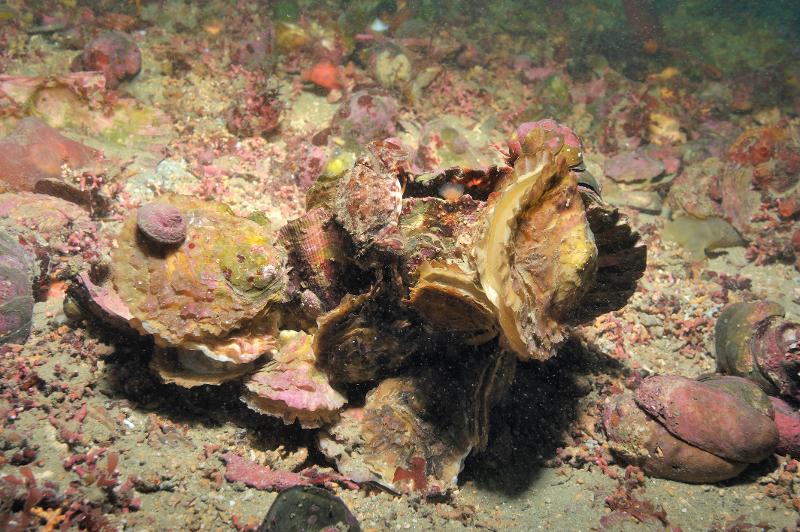
New report: Climate change impacts on Ostrea edulis
Climate change poses risks that can both benefit and threaten the well-being of the European oyster, Ostrea edulis. Changes in temperature, salinity, and pH are factors that can affect growth and survival, both directly and indirectly. High temperatures during the summer can have a negative impact, but during the rest of the year they can promote growth. Lower salinity, resulting from precipitation and runoff from land, has only a negative impact on oysters. However, European oysters are considered to be relatively resilient to the direct effects of ocean acidification.
Indirect risks include reduced food availability, harmful algal blooms, and increased biological fouling. The researchers identified a total of 29 risks, 17 of which are prioritized and one that should be avoided at all costs. Various factors can also interact, thereby increasing the risk level. Four measures are proposed: more research on local climate risks, increased monitoring, the ability to regulate water depth, and better site selection for aquaculture facilities.