
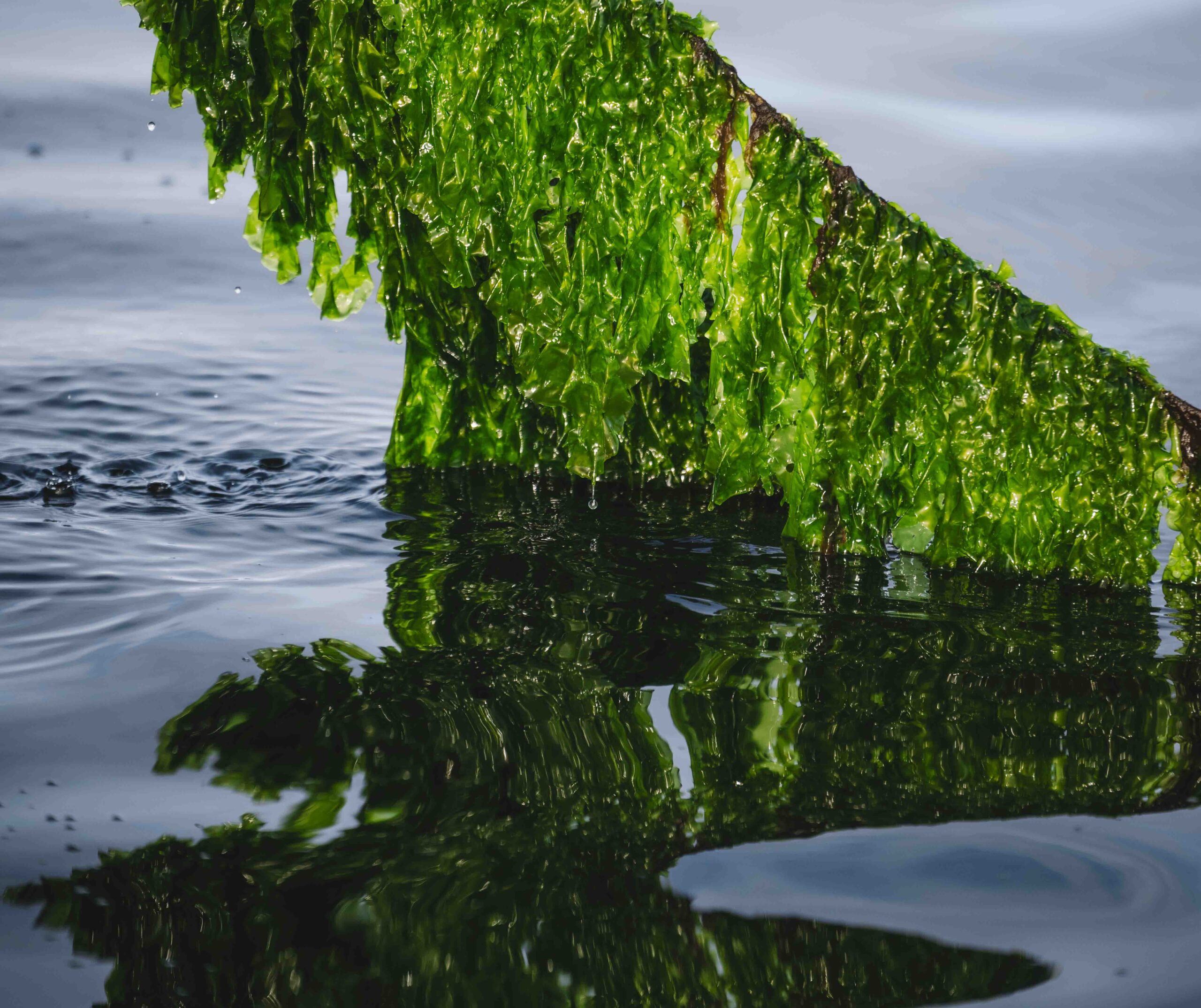
New article: “Unravelling the fermentation potential of Ulva fenestrata by lactic acid bacteria and its impact on protein digestibility and mineral accessibility”
Fermenting the green alga sea lettuce (Ulva fenestrata) can improve both protein breakdown and the availability of essential minerals. This is shown in a new study by researchers from Chalmers, KTH, DTU, and the University of Gothenburg, with funding from Blue Food.
The researchers investigated how different lactic acid bacteria can be used to ferment sea lettuce, a species that has been highlighted as a promising raw material for sustainable foods of the future. A total of 36 bacterial strains were tested, 30 of which demonstrated a good ability to ferment the algal material. After further screening, several strains were identified that could both lower the pH and break down proteins in the biomass. The results show that fermentation can increase the digestibility of proteins and the availability of iodine and iron.
The study shows that fermentation can be a promising method for improving the nutritional value of sea lettuce and thereby enhancing the potential of algae as a food source. The results provide new insights into how marine raw materials can be processed to make them more appealing and nutritionally accessible for consumption.
The draft was generated using AI and then edited manually.