
“Unlocking the potential of blue hybrids and marine food micronutrients”
Herring and bivalves, such as oysters and mussels, are among the most climate-efficient and nutrient-dense marine resources available to us, but their full potential remains largely untapped. The same is true for algae, which are characterized by their distinct fiber and mineral profiles. Rufa Mendez, a postdoctoral researcher at Chalmers University of Technology and a young researcher at the research center Blue Food, is investigating how these low-trophic-level species can be transformed into high-value, sensorially appealing, and nutrient-rich food products through innovative processing methods and hybrid concepts. A specific focus is on how the bioavailability of key micronutrients can be optimized.
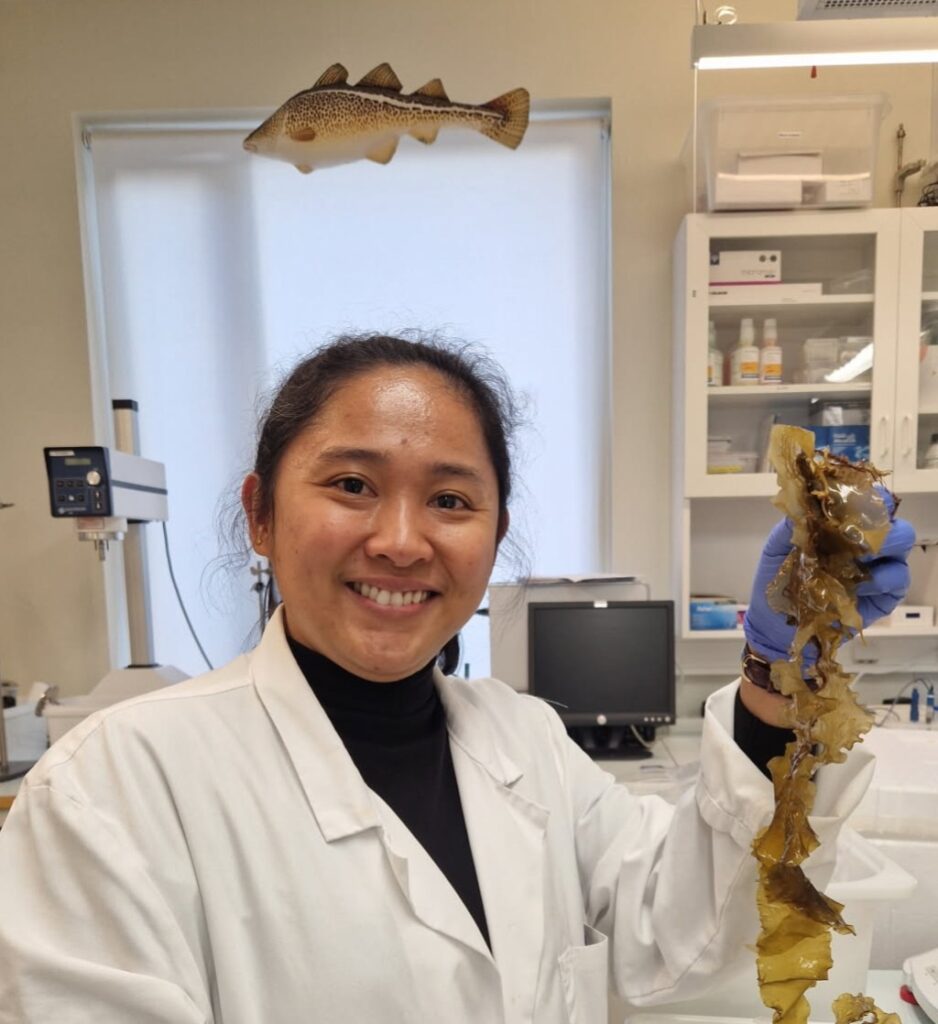
Within her project, Rufa is exploring the biochemical and physical properties of herring, oysters and three seaweed species to understand how these raw materials can be leveraged to create future-ready foods with enhanced stability, sensory attributes, and nutritional profiles. A key component of this research is the development of seaweed–herring hybrid products where the oxidative stability and functionality of herring mince is enhanced via e.g., seaweed-derived antioxidants and polysaccharides. Concurrently, the project will investigate how oysters can be refined into high-value de-shelled formats while maintaining their nutritional benefits for their greater accessibility and broader culinary versatility.
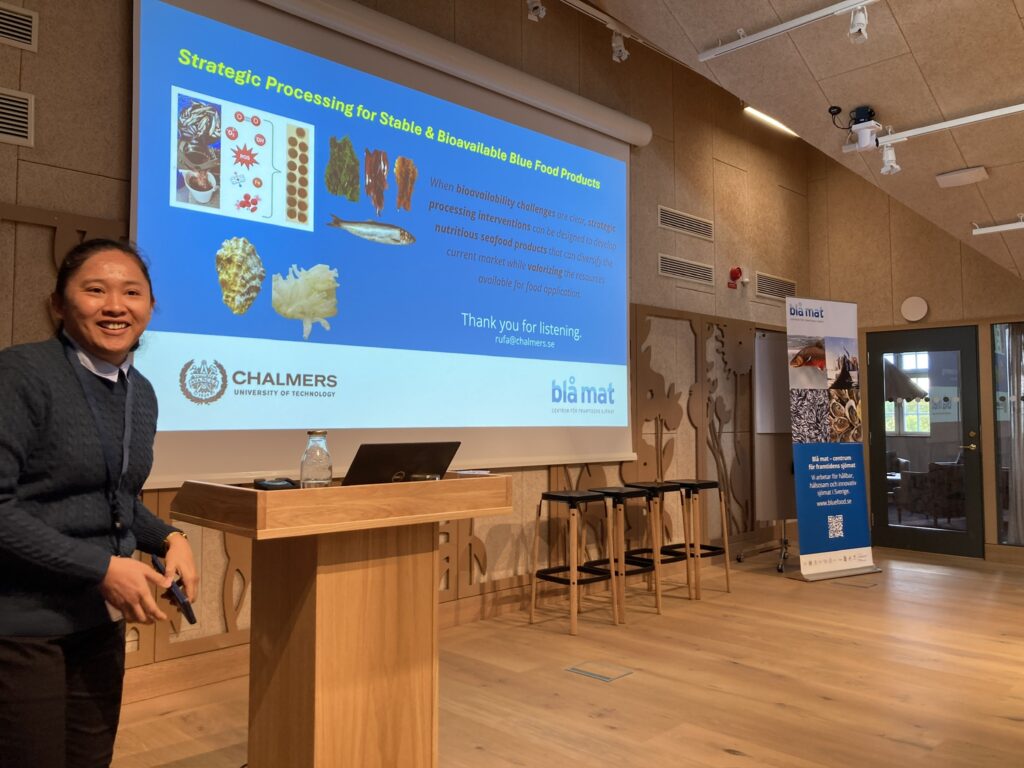
Beyond nutrient quantification, an important aspect being explored is how applied processing technologies and hybridization affect the relative ratio of nutrients which can be taken up by the human body. To explore this, Rufa will apply in vitro assays to investigate the accessibility and bioavailability of important micronutrients such as iron, zinc and vitamin B12.
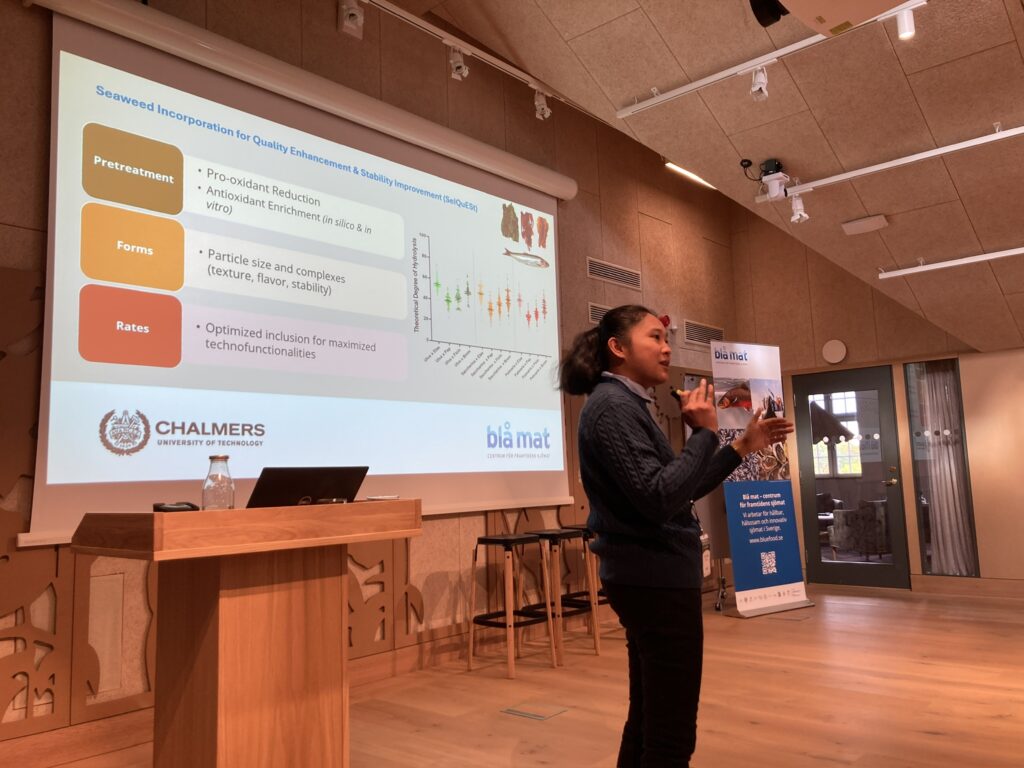
Collectively, Rufa’s research endeavors contribute to the creation of resilient and attractive blue value chains by facilitating the production of nutritious foods with minimal environmental impact. By generating knowledge on ingredient interactions, sensory optimization, nutritional insights, and sustainable product design, her project supports advancements in the development of blue foods that are delicious, nutritious, and climate-smart. Ultimately, this will leverage the role of seaweed, herring, and bivalves as cornerstones in the next generation sustainable marine-based diets.